
Patrakar Colony,
Mansarovar, Jaipur 302020 +91 9826417547

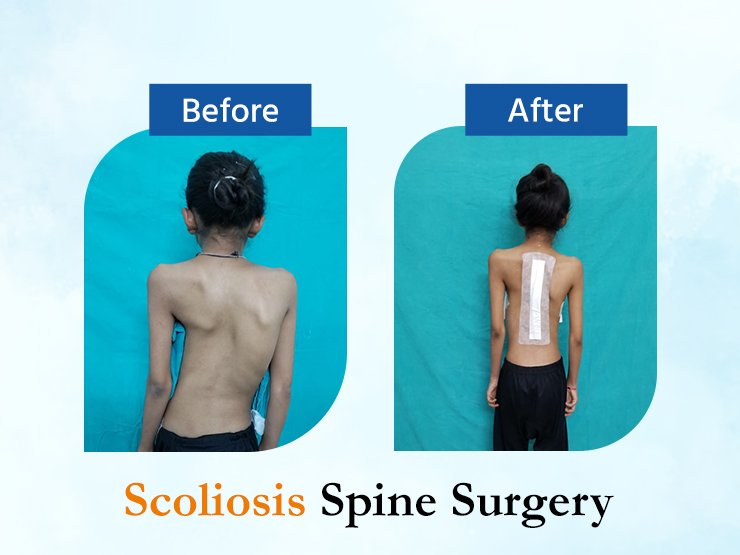
Scoliosis Surgery
Scoliosis is a condition characterized by an abnormal sideways curvature of the spine, which contrasts with the natural front-to-back curve of the back. While it is often mild and asymptomatic, scoliosis can sometimes lead to back pain and changes in posture. It is commonly diagnosed during adolescence. Treatment options may include physical therapy, braces, and, in more severe cases, surgery.
Types of Scoliosis
There are three main types of scoliosis:
- Idiopathic Scoliosis : This is the most common type, with no known cause. It often runs in families, suggesting a genetic link.
- Congenital Scoliosis : This rare type is present at birth and results from vertebrae not forming correctly during embryonic development.
- Neuromuscular Scoliosis : Caused by abnormalities in the muscles and nerves that support the spine, this type is associated with neurological or muscular conditions, such as cerebral palsy, spina bifida, or muscular dystrophy.
Adult-onset Scoliosis or Degenerative Scoliosis can occur in adulthood, often due to weakening of disks and joints or loss of bone density (osteoporosis). It may be a progression of undiagnosed scoliosis from earlier in life, with symptoms becoming more noticeable as one ages.
Idiopathic scoliosis is further classified based on the age at diagnosis:
- Infantile Scoliosis : Diagnosed in children younger than 3 years old.
- Juvenile Scoliosis: Diagnosed in children aged 4 to 10.
- Adolescent Scoliosis : Diagnosed in individuals aged 11 to 18.
- Adult Idiopathic Scoliosis : Diagnosed in individuals over 18, after skeletal growth is complete.
Prevalence
Scoliosis affects approximately 2% of the global population, which equates to over 6 million people in the United States alone.
What are the symptoms of scoliosis?
Scoliosis often does not cause symptoms, but when it does, they may include:
- Back pain
- Difficulty standing upright
- Weakness in the core muscles
- Leg pain, numbness, or weakness
What are the signs of scoliosis?
Signs of scoliosis may include:
- Uneven shoulders
- Shoulder blades that protrude
- Head not centered over the pelvis
- Uneven waist
- Elevated hips
- Persistent leaning to one side
- Uneven leg length
- Changes in skin appearance or texture along the spine, such as dimples, hair patches, or discoloration
What causes scoliosis?
The cause of scoliosis depends on its type and may include:
- Malformation of vertebrae during embryonic development
- Genetic factors
- Spine injury
- Tumor on the spine
- Conditions affecting the nerves or muscles
What are the risk factors for scoliosis?
Risk factors include:
- A family history of scoliosis
- Conditions or injuries affecting the spine, muscles, or nerves
Scoliosis affects all genders and sexes equally, though people assigned female at birth (AFAB) are more likely to require treatment due to more severe curvature.
Is scoliosis genetic?
There is a higher likelihood of developing scoliosis if it runs in your family, but not all cases are genetic.

Tags
Scoliosis Surgery
Achieve a pain-free and active lifestyle. Book your appointment with one of Jaipur's top spine surgeon today!
Scroll to Top